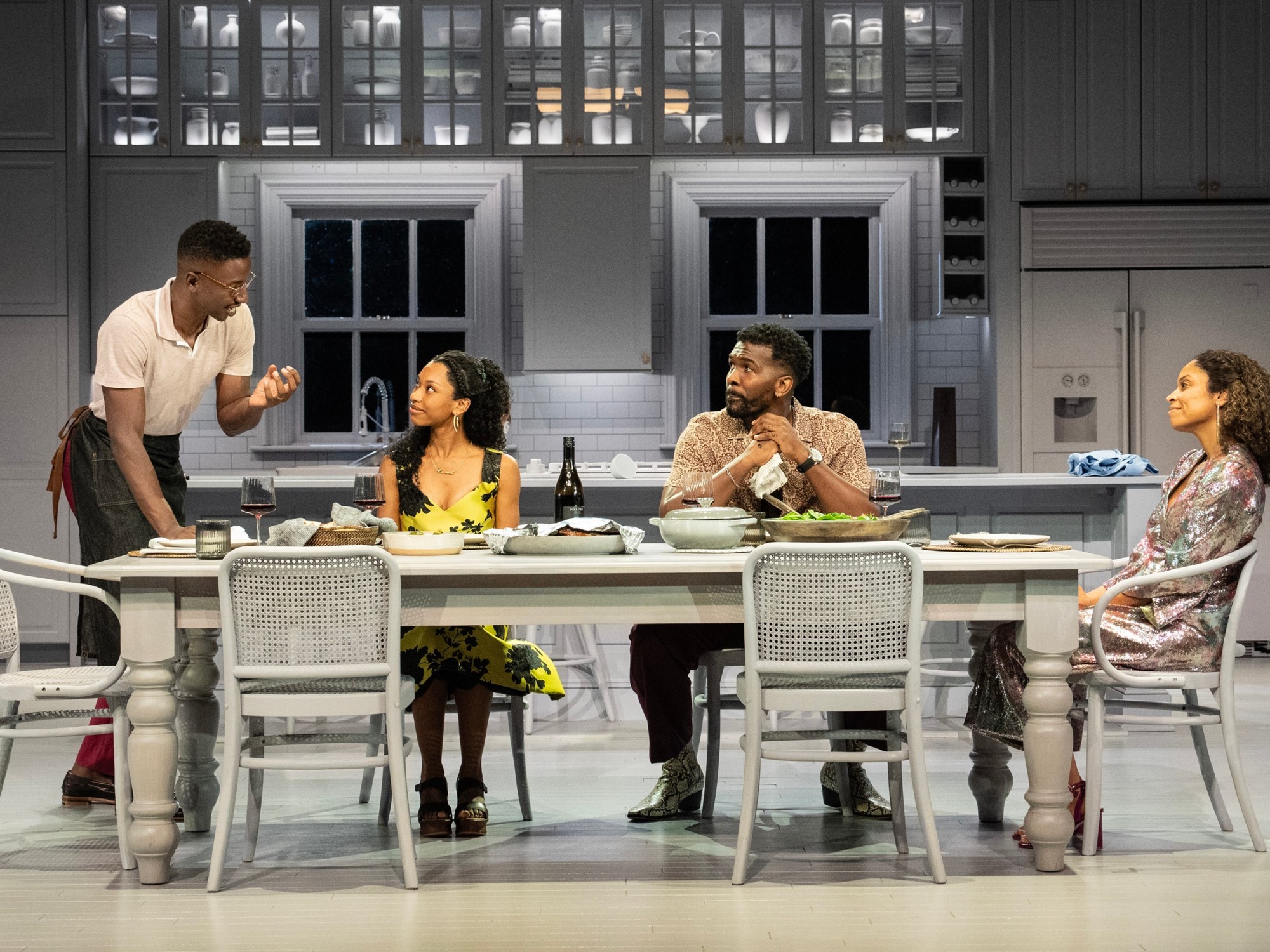
Aisha (Susan Kelechi Watson) and her husband, Travis (Mamoudou Athie), move back to her old neighborhood. Aisha comes from the projects, Travis from wealth. He is a college dropout and a chef who is opening a restaurant in midtown; one appetizer is tenderized chicken gristle with mustard green puree and caviar. Travis says “Wowee” without irony and calls the cops on his neighbors through an app.
Aisha is a community liaison for a new Sports Complex, which will raze Dunbar Projects, or “The Heat,” the development where she grew up. When Earl (Khris Davis), the contractor remodeling their kitchen, hears about her role in the project, he is livid. She will be responsible for the displacement of hundreds of Black people. None of them will be able to afford the new condos. Aisha remembers The Heat with contempt. It was something she survived. Earl remembers it with warmth. It was the community that helped him survive.
James Ijames’ Good Bones examines what success looks like within a system that continues to perpetuate racism against Black Americans. Is Aisha a role model or a sellout? The play also explores the complex emotions surrounding housing projects, which are the sites of both oppression and endurance. What does progress look like here: is it restoration or redevelopment?
The script is well-written, and the actors are uniformly strong. If I have any reservations about the play, it is because it is so formally conservative. It is another conventionally structured drama about an American family that culminates in an explosive dinner where everyone’s thoughts and feelings are revealed. Those bones are no longer good.
Good Bones runs through October 27th at Martinson Hall. 425 Lafayette Street New York, NY. 1 hour 45 minutes. No intermission. Photograph by Joan Marcus.
 scribicide