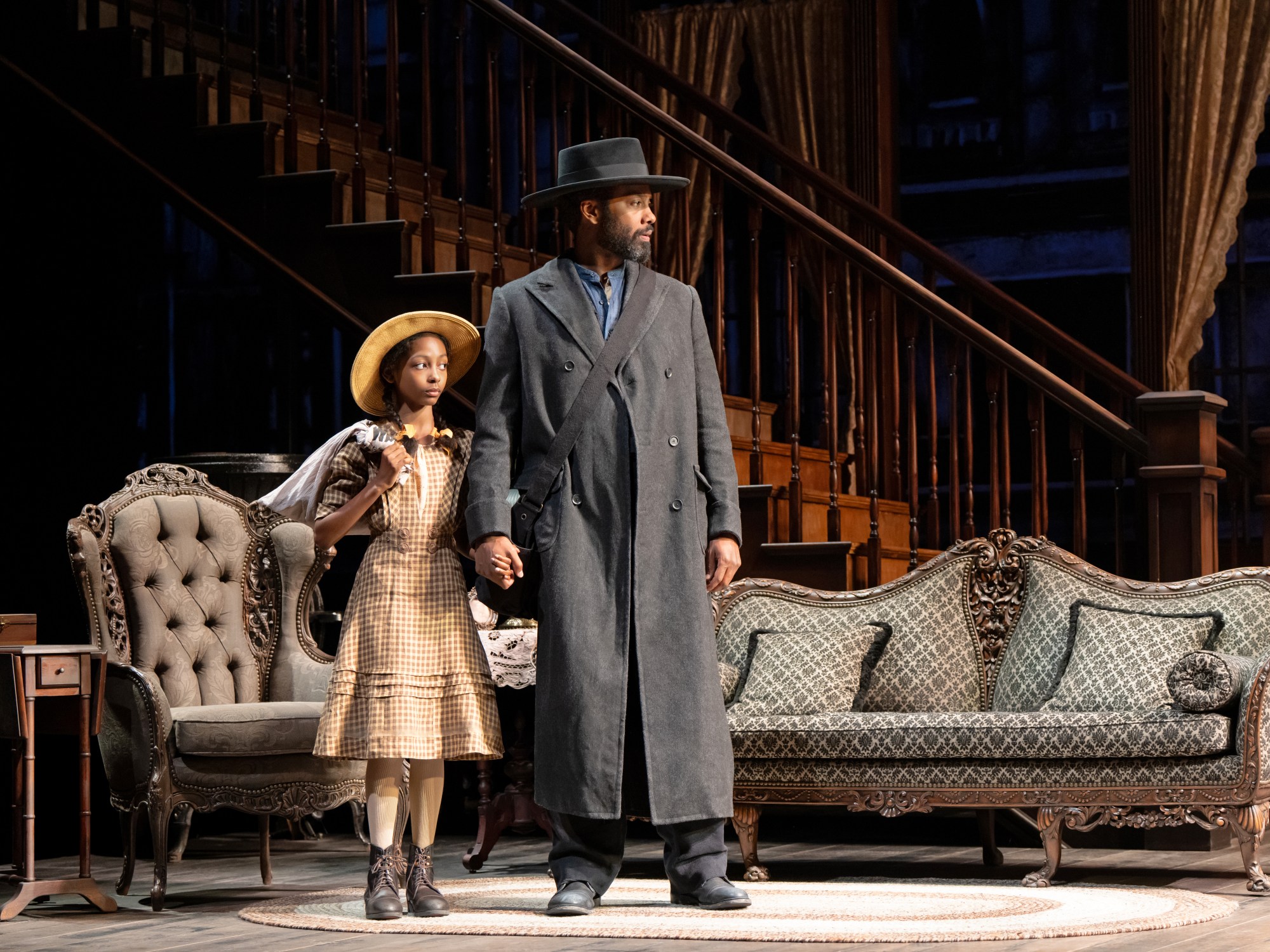
Seth (Cedric the Entertainer) and Bertha Holly (Taraji P. Henson) run a boardinghouse in Pittsburgh in 1911. They have long-term residents, like Bynum Walker (Ruben Santiago-Hudson), a freed slave and conjurer, and they have new residents, like Herald Loomis (Joshua Boone) and his daughter, Zonia (Savannah Commodore and Dominique Skye Turner). Herald is looking for his wife, a “brownskin woman” with “long, pretty hair,” standing “about five feet from the ground.” They were separated. Herald wears a fedora that makes him look a little like Clint Eastwood in the Man with No Name Trilogy. Seth wants him out.
The title of August Wilson’s Joe Turner’s Come and Gone refers to a blues song about the brother of a Tennessee Governor. During the Great Migration, farms along the Mississippi River lost over 37,000 Black laborers to Pittsburgh alone. Joe Turney (the name got changed somewhere along the way), brother of Governor Peter Turney, arrested Black men for petty crimes like gambling and then sentenced them to seven years of prison labor. When a woman asked about a missing man, she would receive the reply, “Joe Turner’s come and gone.”
Herald Loomis is one of these prisoners, and his tragedy is that, upon release, he is forced to go looking for his wife—after almost a decade, it is unclear whether she wants to be found. Joe Turner stole not only his present but also his future; the loss of time has changed his relationships to loved ones. His daughter speaks more to the boy next door (Jackson Edward Davis and Christopher Woodley) than she does to her father.
The current revival of Joe Turner’s Come and Gone, running at the Ethel Barrymore Theatre, is solid. The cast is strong, with no weak links: Cedric the Entertainer gets a lot of mileage out of Seth’s grouchiness, and Santiago-Hudson leads the cast in the highlight of the show, the Juba, a step dance that originated in West Africa and was adapted to American slave culture (for example, drums were banned for fear of slave revolts and replaced with patting knees and thighs). The set design by David Gallo fills the stage, though I do think he should have brought the ceiling down to prevent sound from getting lost above the heads of the actors.
Moreover, I sometimes feel these kinds of realist plays, where people spend most of their time talking, where characters carry symbol-bearing names like Herald, have become somewhat dated. Nevertheless, if you are looking for conventional postwar American theater executed at a high level of craftsmanship, you could hardly do better than this revival of Joe Turner’s Come and Gone.
Joe Turner’s Come and Gone runs through July 26th at the Ethel Barrymore Theatre. 243 West 47th Street New York, NY. 2 hours 30 minutes. One intermission. Photograph by Julieta Cervantes.

